Physical Address
304 North Cardinal St.
Dorchester Center, MA 02124
Physical Address
304 North Cardinal St.
Dorchester Center, MA 02124
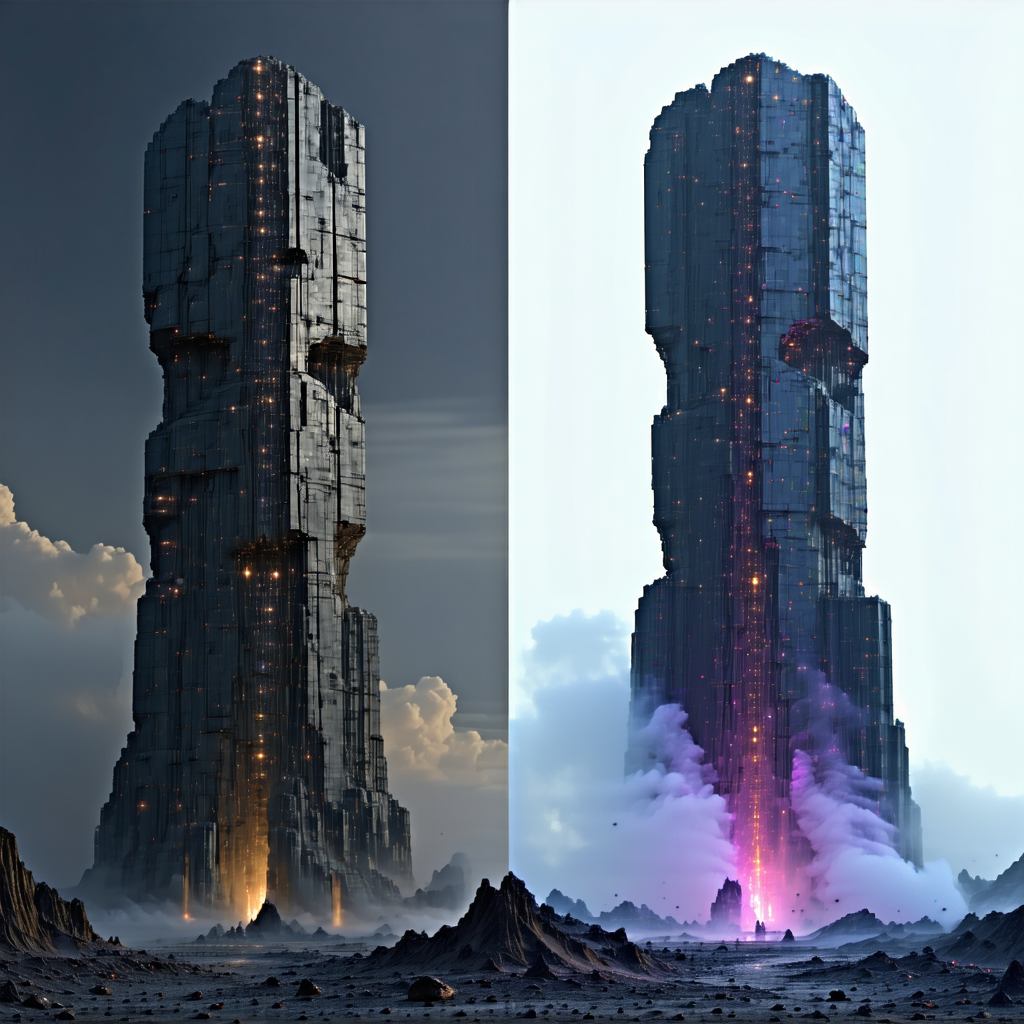
For the past decade, the recipe for artificial intelligence breakthroughs has been deceptively simple: take a neural network, feed it the entire internet, and run it on the largest supercomputer money can buy. This “bigger is better” philosophy, driven by the empirical success of scaling laws, has brought us from incoherent chatbots to GPT-5 and Gemini 3 Pro. But as we race through 2025, an uncomfortable silence is settling over the research labs and boardrooms of Silicon Valley. While industry titans insist “there is no wall,” the exponential curves of progress are beginning to look suspiciously linear. We are facing an existential question that goes far beyond GPU shortages or energy bills: Have we mistaken the scaling of statistical prediction for the creation of intelligence?
The prevailing narrative suggests that if we simply build a cluster with 100,000 H100 GPUs and train a model with ten trillion parameters, Artificial General Intelligence (AGI) will inevitably emerge. However, a growing body of evidence suggests this is a dangerous illusion. We are not merely hitting a speed bump; we are colliding with hard conceptual and physical ceilings. The era of “brute force” AI is ending, and if we want to achieve true reasoning, common sense, and genuine understanding, the AI community must pivot from engineering larger models to discovering better fundamental ideas.
The most immediate threat to the scaling paradigm is a simple, stubborn fact: the world is finite. For years, scaling laws held that performance gains were a predictable function of increased compute, data, and parameter size. But this equation relies on resources that are rapidly depleting.
The most critical bottleneck is not silicon, but language itself. We have effectively trained our flagship models on the sum total of high-quality human public text. Research indicates that human-generated data cannot sustain current scaling trajectories beyond this decade. We are scraping the bottom of the barrel. The industry’s proposed solution—feeding models “synthetic data” generated by other AI—risks creating a closed feedback loop. Like a photocopy of a photocopy, this “inbreeding” of data can lead to model collapse, where nuances are lost and errors are amplified. There is only one internet, and we have already read it.
Then there is the physical toll. Training flagship models like Llama 3 requires nearly 50 times the compute of their predecessors. We are approaching a point where the energy required to marginally decrease a model’s error rate rivals the consumption of small nations. While companies like xAI rush to build massive infrastructure like the Colossus cluster, we must ask: is this sustainable? Moore’s Law is slowing, and semiconductor foundry capacity is booked years in advance. Relying on linear hardware improvements to support exponential computational hunger is a mathematical impossibility.
Even if we had infinite energy and infinite data, we would still face a more profound problem: the architecture itself. The current paradigm of Large Language Models (LLMs) is built on the Transformer architecture, which excels at pattern matching and next-token prediction. It is a statistical engine of unparalleled power, but it is not a thinking machine.
Scaling has made these models more eloquent, but not necessarily smarter in the ways that matter. They still struggle with genuine reasoning, causal understanding, and common sense. A trillion-parameter model can write a sonnet about quantum physics, yet it can still fail basic logical puzzles that a human child would solve intuitively. This is the “entropy limit.” Natural language has finite entropy; you cannot reduce the loss function to zero. We are seeing diminishing returns where massive increases in model size yield only incremental improvements in performance.
We have fallen into the “Chinchilla Trap”—optimizing purely for compute efficiency during training while ignoring the utility of the model during inference. We are building leviathans that are prohibitively expensive to run, all to achieve a slightly better statistical probability of guessing the next word. This is not the path to AGI; it is the path to a very expensive autocomplete.
If scaling is hitting a wall, where does the future lie? The answer requires a shift in strategic focus—from heavy engineering back to fundamental science. We need to stop asking “how big can we build it?” and start asking “how does intelligence actually work?”
We are already seeing the first cracks in the scaling dogma with the rise of “inference-time compute,” exemplified by models like OpenAI’s o3 series. Instead of just being bigger, these models are designed to “think” longer before answering, simulating a form of reasoning. This mirrors the human distinction between System 1 (fast, instinctive) and System 2 (slow, deliberative) thinking. This is a promising start, but it is largely a workaround—a patch on top of the existing Transformer architecture rather than a reimagining of it.
To break through the current plateau, we must look to the only proof-of-concept for general intelligence we have: the human brain. Biological systems operate on 20 watts of power and learn from sparse data, yet they possess causal reasoning capabilities that elude our largest clusters. The next generation of AI breakthroughs will likely come from neuro-symbolic architectures, which combine the learning capability of neural networks with the logical structure of symbolic AI.
We need to explore multimodal learning not just as a way to ingest images and video, but as a way to ground language in physical reality, giving models a “worldview” rather than just a “word view.” We need algorithms that prioritize data efficiency—extracting more signal from less noise—rather than just data volume.
The “bigger is better” mindset has served us well, but it has also made us intellectually lazy. It is safe to invest billions in a larger cluster; it is risky to invest in an unproven architectural paradigm. Yet, the history of science teaches us that S-curves always flatten. The technologies that got us to 2025 will not get us to 2030.
The AI community stands at a crossroads. We can continue to pour concrete and burn gigawatts in a desperate attempt to squeeze the last drops of performance from the Transformer, or we can embrace the uncertainty of exploration. The future of AI belongs to those who recognize that the scaling wall is real, and that the ladder over it won’t be built of more GPUs, but of new, fundamental ideas. It is time to put the “science” back into computer science.